Five of Cups tarot card meaning
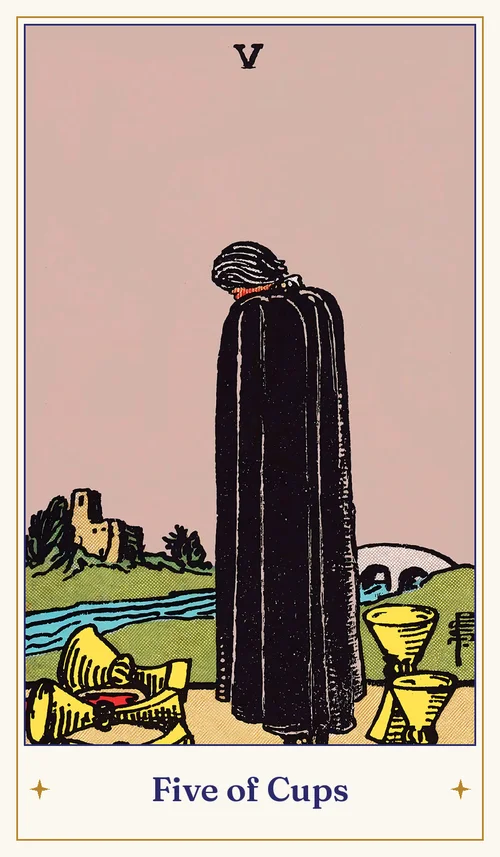
The Five of Cups is the card of loss and regret. Upright, it stands for grief, disappointment and dwelling on what went wrong, while overlooking what still remains. Reversed, it can point to acceptance, healing, forgiveness and moving forward after a setback. It is the fifth card of the Cups suit.
What does Five of Cups mean for you?
Add your date of birth to see how it sits with your Life Path. Free, nothing is saved.
Five of Cups at a glance
- Upright: loss, grief, regret, disappointment, sadness, focusing on the negative
- Reversed: acceptance, healing, forgiveness, moving on, finding peace
- Suit: Cups, water and emotions
- Number: 5, challenge and change
- Yes or no: leans no
What the card shows
A figure in a long black cloak stands with head bowed, looking down at three spilled cups lying on the ground. Behind them, two cups remain standing, unnoticed. A river flows nearby, and a bridge leads across it towards a castle.
The black cloak and bowed head express mourning. The spilled cups represent what has been lost. Yet two cups remain upright, symbols of what is still available, if only the figure would turn around. The bridge suggests a path forward across the river of emotion, towards a place of safety.
Upright meaning
Upright, the Five of Cups acknowledges that something painful has happened. You may be grieving a loss, disappointed by an outcome or regretting a choice. These feelings are real and deserve to be felt.
The card also gently points out that you may be focusing only on what is gone. There are still things of value in your life: people, opportunities and strengths that remain. When you are ready, turning towards them can help you heal.
The Five of Cups is about the process of grief, not an instruction to rush through it.
Reversed meaning
Reversed, the Five of Cups often suggests that healing has begun. You may be accepting what happened, forgiving yourself or others, and starting to look forward again.
It can also point to finding meaning in a loss, or reconnecting with people and things you had overlooked. In some readings, it may suggest unresolved grief that still needs attention.
Five of Cups in love
Upright: For singles, the Five of Cups may point to lingering sadness from a past relationship. For couples, it can describe disappointment, a painful argument or regret. It encourages honesty about feelings.
Reversed: It suggests moving on from heartbreak, reconciliation or forgiveness.
As feelings: Upright, someone may feel regret or sadness about the relationship.
Five of Cups in career and money
Upright: At work, the Five of Cups can point to disappointment, such as a missed opportunity, a rejected application or a project that failed. It encourages you to learn and look for what remains.
Reversed: It suggests recovering from a setback and finding new opportunities.
Money: Upright, it may point to financial loss or regret. Reversed, it suggests recovery and learning from the experience.
Five of Cups as yes or no
The Five of Cups leans towards no, especially if the question involves something that has already been lost. Reversed, it may lean yes for questions about healing and moving on.
Five of Cups and numerology
Fives carry the number 5, the number of change and challenge. In the Cups suit, 5 represents emotional upheaval, the change that comes through loss. The tool on this page shows how this card relates to your Life Path.
Five of Cups for health and wellbeing
Upright, the Five of Cups may point to grief or low mood. Allow yourself to feel, and reach out for support from friends, family or a counsellor if you need it. Reversed, it suggests emotional healing. Tarot is a reflective tool, not medical advice.
Five of Cups in a reading
- Past: a loss or disappointment that still affects you.
- Present: acknowledge your grief, and notice what remains.
- Future: a setback may come, but so will recovery.
- Advice: feel what you need to feel, then turn towards what is still here.
Common Five of Cups combinations
- Five of Cups and the Three of Swords: deep heartbreak.
- Five of Cups and the Six of Cups: comfort from the past or old friends.
- Five of Cups and the Star: hope and healing after loss.
- Five of Cups and the Eight of Cups: walking away after disappointment.
The spiritual meaning of the Five of Cups
Spiritually, the Five of Cups is about the transformative power of grief. Loss can deepen compassion and show us what we truly value. The bridge in the card suggests that there is always a way across, even if it is not yet visible.
Grief takes its own time
The Five of Cups does not ask you to hurry. Grief has no fixed timetable, and the card's message is not "get over it", but "you are not left with nothing". When you are ready, the two standing cups will still be there.
Five of Cups in friendship and family
In friendship and family readings, the Five of Cups can describe grief within a family, a friendship that has ended or disappointment in someone close. It acknowledges that the hurt is real. It also points to the two cups still standing: the friends and family members who are still there for you. Reaching out to them, even briefly, can be the first step across the bridge in the card. Reversed, it suggests forgiveness and reconnection after a period of distance.
Questions to ask when the Five of Cups appears
- What have I lost, and have I allowed myself to grieve it?
- What remains that I may be overlooking?
- Is there someone, including myself, I need to forgive?
- Who could support me through this?
Frequently asked questions
Is the Five of Cups a bad card?
It is a card of sadness and loss, but it also points to what remains and the possibility of healing.
What does the Five of Cups mean in love?
Upright, it suggests regret or sadness. Reversed, it points to moving on or reconciliation.
Is the Five of Cups a yes or no card?
It leans no.
What does the Five of Cups reversed mean?
It can mean acceptance, healing, forgiveness and moving forward.
Go further
Related
Written by the NumberTeller editorial team. Updated 13 November 2026.
Tarot readings are offered for reflection and guidance. They do not predict events, and no specific outcome is promised.